|
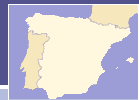
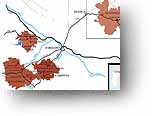
Located in Spain’s northeast province of Zaragoza, 200
miles to the west of Barcelona, DO Campo de Borja is physically
a continuation of southern Navarra, south-west of the River Ebro. It is an area rich in winemaking history which, like several
other lesser known DO regions in Spain, has weathered serious
hardships but is now poised to emerge as a region producing quality
Spanish wines. The rugged, mountainous area is bordered by
the snow-capped mountains of the Sierra del Moncayo, and the
vineyard sites that line these are situated between 350 and
700m in altitude. This position encourages the growth of ripe grapes in a dry environment free from rot and pests. It is also an area marked by an extreme continental
climate, with a certain Atlantic influence during the winter whose most remarkable feature is a strong wind from the north-west called “Cierzo” which is cold and dry. The Mediterranean climate's influence is noticeable during the summer. These particular features give rise to unique peculiarities which distinguish its grapes from other wine producing areas. Widely contrasting diurnal and seasonal temperatures and scarce rainfall at under 400 mm/year, make this dynamic critical for developing ripe grape skins with aromatic flavour, complexity and structure. Soils are poor, composed of brown, limey, calcareous,
sandy limestone that is well-drained and porous (allowing
air access to the vine’s rootstocks), and rich in organic
matter and nutrients. The soils near the Moncayo range contain
more clay, ferrous minerals and stones. 75% of DO Campo de
Borja red wine production is made from Garnacha.
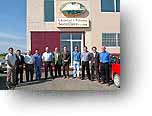
Founded in 1956, Bodegas Santo
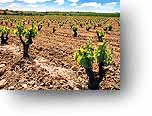
Cristo is now a modern winery owning about 1200 hectares of
vineyards of autochthonous Garnacha,
Tempranillo,
Syrah, Cabernet
Sauvignon, Mazuelo
and Macabeo.
Prime vineyards cover terraces along the River Huecha and
the Plasencia Plateau, in an area designated as the Somontano
de Moncayo. Significant recent investment in vineyard management
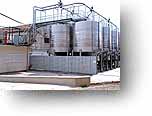
and new technology has provided Bodegas Santo Cristo with
the necessary equipment and modern installations, with over
780 Bordeaux casks of American oak, to produce excellent quality,
modern, stylish wines which are becoming highly regarded in
international markets.
NEW!
Click on the underlined grape varieties
for more information.
|